To the factory worker a hat block is a simple tool but to me it is a thing of beauty. A three dimensional sculpture, that has been lovingly carved or molded to create further things of beauty.
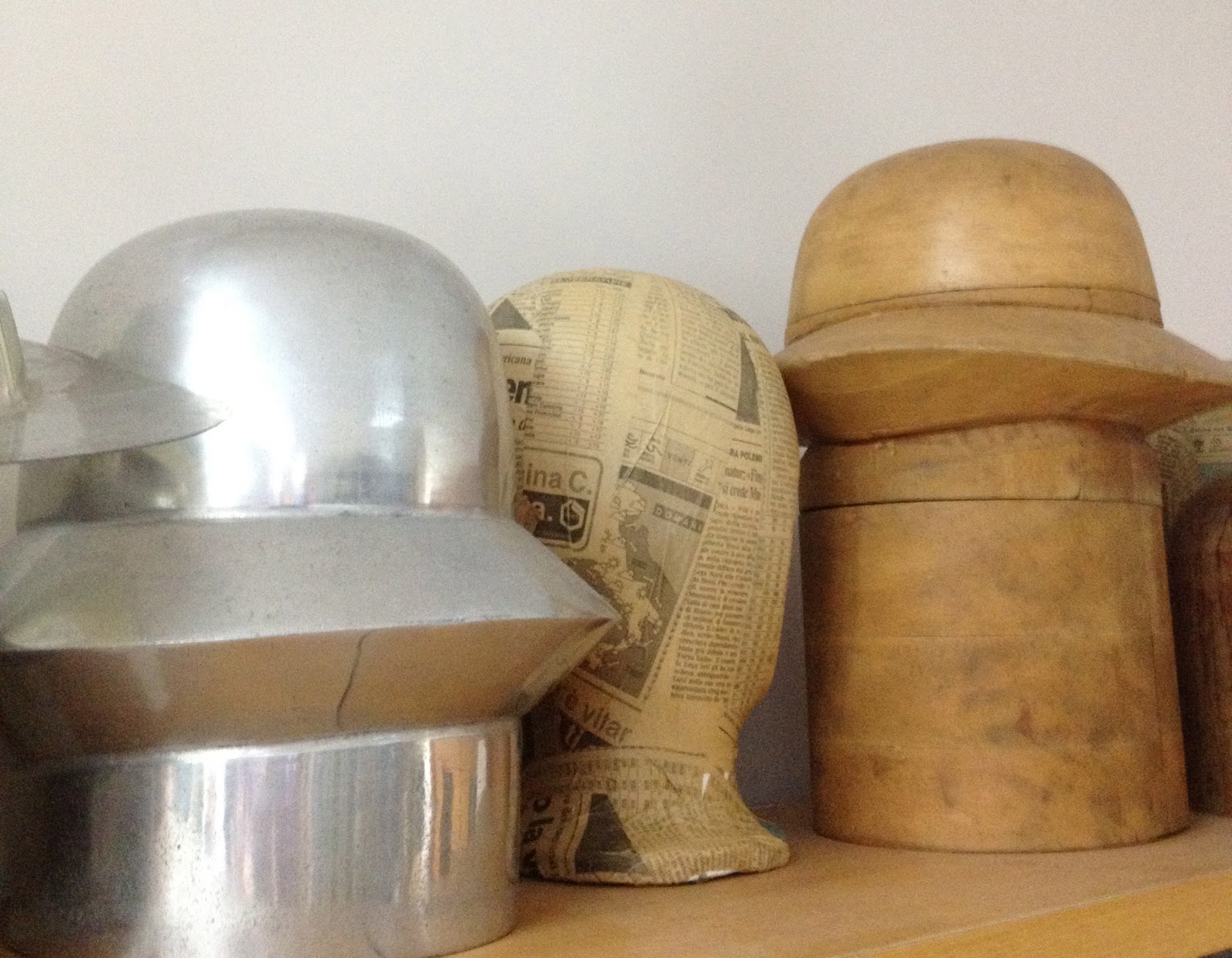
A hat block (wooden) or hat mold (aluminum) is a shape over which a warm dampened felt or straw body is pulled. The felt or straw body is then put in an oven to dry, where it conforms to the shape of the block.
Hat blocks were originally made from carved wood but later industrial molds are made from aluminum.
The center paper covered shape is not a hat block but a wig block.
Bespoke milliners and hatters use wood blocks to lovingly coax the felt to conform to the shape of the block while using brute strength to stretch the felt and trying to avoid burning their fingers on the hot damp felt.
Fedoras, safaris and cowboy hats are made a combination of 2 blocks. The crown is blocked first and is then inserted into the brim which is then blocked. Rope is used to tie off where the crown meets the brim (the neck) and also around the brim edge (the flange).
Cloche shapes are either made in 1 piece for classic shapes but a 4 piece block is needed for cushion brim. A cushion brim is not cut at the edge but folds back onto itself for a smother finished edge.
An ascot shape requires a 3 piece mold. After the felt is oven dried the center piece is first pulled out and then the back and front sections. This avoids stretching the shape.
Industrial blocks are made from aluminum and operate a little differently.
Basically the brim has a negative and positive brim. The felt/straw is sandwiched in between the top and bottom molds, as the molds are self heated, there is no need to dry in an oven, so the whole process is speeded up for mass production.
Here are 2 fedora aluminum molds where the brim has a straw body being shaped.
Every variation on a shape needs its own distinct mold. Here we see the top and bottom mold. The top can be attached to the machine and will press down on the bottom during the blocking process.
Every head-size size need its own mold.
The positive mold sits over a flame. the moistened felt/straw is placed over the mold and the operator pushes a button to lower the negative top mold (under pressure) to meet the bottom. This mold is used to make a fedora.
This beautiful old aluminum mold is used to make this gorgeous Callanana millinery cloche.
The first mold will make a fedora cloche. The second will make a beehive cloche. The third is a classic cloche shape.
This is definitely an "off to the derby" mold.
A worker is using this bowler shape as a key tray.
A group of top hats, after being blocked, are waiting their turn to go into the oven. Note the white rope used at the brim edge (flange). The top hat is a very difficult shape to make.
Each top hat head size needs its own block.
Some old ascot cap molds gathering dust.
A selection of wood, aluminum and plastic molds.
Waste not want not. Felt bodies are expensive, so often the excess flange, the felt from the rope tie to the outer brim edge, is used as hat trim. Here is a selection of ladies die trims.
Die cut leaves are always popular.
If you would like to order your very own aluminum hat mold, contact Ruud Fiegen from Hatblocks Holland.
r.fiegen@home.nl
European Designer, American style. John Callanan originally from Cork City Ireland, had the privilege of studying with one of America's legendary milliners, Anne Albrizio at The Fashion Institute NYC. He would like to also acknowledge his mentor Martin Izquierdo, who suggested that he study hat making and to Douglas Highsmith for supporting the brand for the past 24 years. Callanan hats are distributed by Dorfman Pacific Hat Company.
Monday, October 29, 2012
Sunday, October 14, 2012
The "MUST HAVE" hats for fall 2012
The hat fall 2012 season is off to a great start. Designers have pushed the envelope to more extreme silhouettes and some might ever say that have "gone to the birds".
Why wear hair? Or wigs? When you can wear feathers instead.
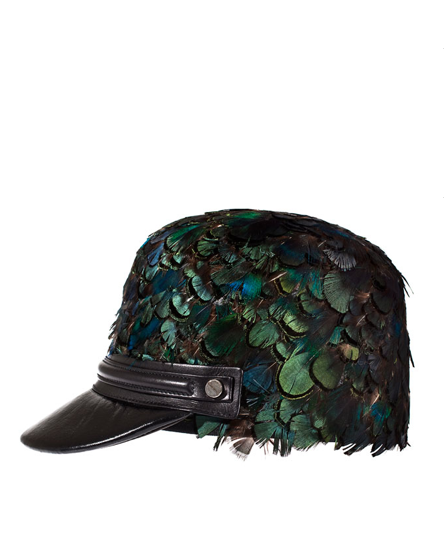
Roberto Cavalli's Feather covered cap is just gorgeous.
Feathered hats are always special to me, as they were the speciality of my mentor Anne Albrizio's atelier. Most milliners use store bought pads (where the feathers are glued onto a fabric pad) but Anne and her lades glued the feathers individually onto each hat.
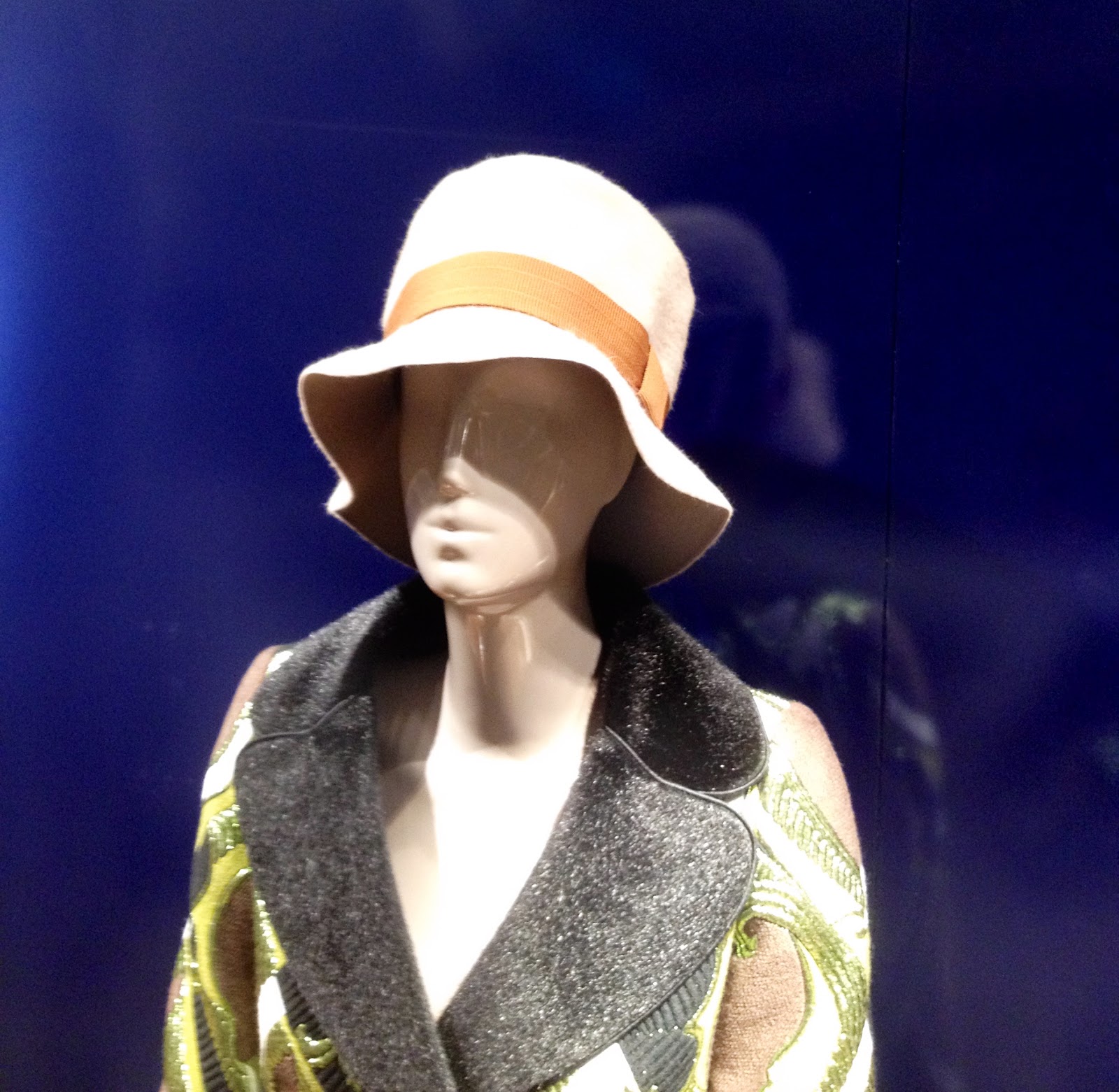
If you feel the feathers are too much for you, I suggest this seasons Max and Co's felt cap.
The best way to describe these hats is "a bashed up, over-sized crowned cloche; Reminiscent of a Gibson Girl hat. Gibbon girls circa 1890-1910, tended to have an abundance of curly hair, pinned high on their heads ergo the high and extra large crowns, that sat over the massive hairdos.
The stylized hats of the add campaign has been tamed down for the stores, to a high crowned cloche, with a raw edge. You can create this look yourself by buying a soft, raw edged, felt fedora and punching the crown out.
Vivienne Westwood also went to the attic for inspiration. Again we see the over sized crown donned over a high top knot hairdo.
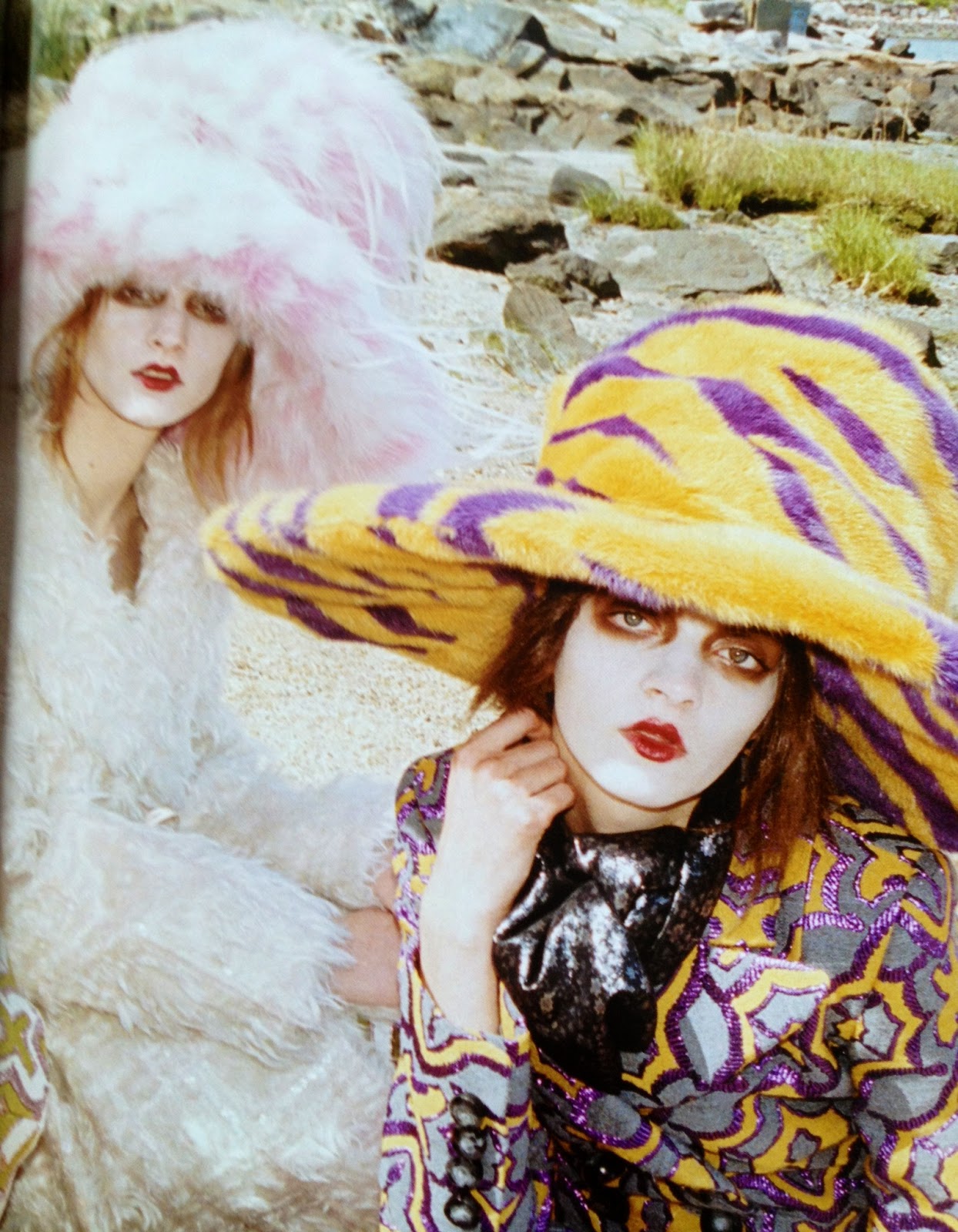
Mark Jacobs hat du jour is an over-sized faux fur style that is really more suited as a Burning Man headpiece or as a Halloween outfit.
So, the most interesting hats are Louis Vuitton's, Cavalli and Etro
but for me the chicest and most wearable on a daily bases is Donna Karan's fetching fedora in black and grey.
Why wear hair? Or wigs? When you can wear feathers instead.
Roberto Cavalli's Feather covered cap is just gorgeous.
Feathered hats are always special to me, as they were the speciality of my mentor Anne Albrizio's atelier. Most milliners use store bought pads (where the feathers are glued onto a fabric pad) but Anne and her lades glued the feathers individually onto each hat.
If you feel the feathers are too much for you, I suggest this seasons Max and Co's felt cap.
Etro models were also flying high in feather covered fedoras.
Over at LV they scoured the brocants and their great grandmothers attics for inspiration.
The best way to describe these hats is "a bashed up, over-sized crowned cloche; Reminiscent of a Gibson Girl hat. Gibbon girls circa 1890-1910, tended to have an abundance of curly hair, pinned high on their heads ergo the high and extra large crowns, that sat over the massive hairdos.
The stylized hats of the add campaign has been tamed down for the stores, to a high crowned cloche, with a raw edge. You can create this look yourself by buying a soft, raw edged, felt fedora and punching the crown out.
Vivienne Westwood also went to the attic for inspiration. Again we see the over sized crown donned over a high top knot hairdo.
Mark Jacobs hat du jour is an over-sized faux fur style that is really more suited as a Burning Man headpiece or as a Halloween outfit.
So, the most interesting hats are Louis Vuitton's, Cavalli and Etro
but for me the chicest and most wearable on a daily bases is Donna Karan's fetching fedora in black and grey.
Saturday, October 6, 2012
SUBWAY HATS
Besides the efficient way of getting around NYC, there is little to admire about subway stops. The 23rd street, "R" stop is an exception to the rule.
It was renovated in the 1970's with squeaky clean white tile and lovely hat mosaic work. As the last vestige of millinery is on 36 and 37th streets between 5th and 6th Avenues, there is still a Millinery synagog on 6th Avenue between 36 and 37 street, one might wonder why 23rd street was picked as the hat subway stop.
The 23rd street subway stop was opened in 1918. Back then 23 street was still the center of the NYC fashion world. Tiffany's was situated on Union Square and Lord and Taylor had opened on Broadway and 19th street in 1918. The neighboring areas of 5th and 6th avenues from 14th -23rd streets is designated Ladies Mile as a reminder of the glorious department stores that were once found there. I am sure that many elegantly plumed hats were seen on the 23rd street platforms back then.
Here are some of the mosaics that remind us of those bye gone days.
Hat worn by Fay Templeton, Singer and actress.
Boater hat worn by Maud Nathan, reformer.
a dandy fedora worn by Irishman Oscar Wilde. Writer and poet.
Top hat worn by Clement C. Moore, author.
Boater worn by Film Actress Mary Pickford.
Bowler worn by Scott Joplin, Composer.
Veiled boater as worn by Eleanor Roosevelt. humanitarian.
High crowned bowler as worn by James Corbett aka Gentleman Jim, Boxer.
Fascinator worn by actress Sarah Bernhardt.
Porkpie worn by Charles Melville Dewey, Artist.
Breton worn by Edwin Porter, film maker.
Large brim fedora worn by William Randolph Hearst, newspaper publisher.
Plumed tri-corn hat worn by Lillie Langtry, actress.
Boater worn by Samuel Clemens (Mark Twain) author.
Shallow crown boater with bird wing trim. Worn by Eva Tanguay, entertainer.
Boaters worn by Billie Burke, entertainer and Florence Ziegfield, theatrical producer.
Bowler worn by William Barclay Parsons, Chief Engineer of the rapid transit Commission.
High crown fedora worn by William A. Pendergast, NYC Comptroller.
Basque beret worn by Edward Penfield, graphic artist.
Snazy boater worn by Arthur Davis, artist.
Bow trimmed hat worn by Gertrude Kasebier, photographer.
A cloth newsboy cap worn by Joseph Barondess. labor leader. Working men wore cloth caps.
A musketeer hat worn by John Barrymore, actor. The right side is usually cocked up to allow the horse rider to swing his sword.
A witch crown hat trimmed with ribbon rosettes worn by prima donna Lillian Russell.
Jockey cap worn by Nellie Bly, stunt person and journalist.
Magic boater as worn by Ehrich Weiss aka Harry Houdini, magician.
Beautiful slouch cap worn by William sidney Porter (O'HENRY) author.
Richly trimmed hat worn by Isadora Duncan, dancer.
If the hat fits, wear it!!
The End.
It was renovated in the 1970's with squeaky clean white tile and lovely hat mosaic work. As the last vestige of millinery is on 36 and 37th streets between 5th and 6th Avenues, there is still a Millinery synagog on 6th Avenue between 36 and 37 street, one might wonder why 23rd street was picked as the hat subway stop.
The 23rd street subway stop was opened in 1918. Back then 23 street was still the center of the NYC fashion world. Tiffany's was situated on Union Square and Lord and Taylor had opened on Broadway and 19th street in 1918. The neighboring areas of 5th and 6th avenues from 14th -23rd streets is designated Ladies Mile as a reminder of the glorious department stores that were once found there. I am sure that many elegantly plumed hats were seen on the 23rd street platforms back then.
Here are some of the mosaics that remind us of those bye gone days.
Hat worn by Fay Templeton, Singer and actress.
Boater hat worn by Maud Nathan, reformer.
a dandy fedora worn by Irishman Oscar Wilde. Writer and poet.
Top hat worn by Clement C. Moore, author.
Boater worn by Film Actress Mary Pickford.
Bowler worn by Scott Joplin, Composer.
Veiled boater as worn by Eleanor Roosevelt. humanitarian.
High crowned bowler as worn by James Corbett aka Gentleman Jim, Boxer.
Fascinator worn by actress Sarah Bernhardt.
Porkpie worn by Charles Melville Dewey, Artist.
Breton worn by Edwin Porter, film maker.
Large brim fedora worn by William Randolph Hearst, newspaper publisher.
Plumed tri-corn hat worn by Lillie Langtry, actress.
Boater worn by Samuel Clemens (Mark Twain) author.
Shallow crown boater with bird wing trim. Worn by Eva Tanguay, entertainer.
Boaters worn by Billie Burke, entertainer and Florence Ziegfield, theatrical producer.
Bowler worn by William Barclay Parsons, Chief Engineer of the rapid transit Commission.
High crown fedora worn by William A. Pendergast, NYC Comptroller.
Basque beret worn by Edward Penfield, graphic artist.
Snazy boater worn by Arthur Davis, artist.
Bow trimmed hat worn by Gertrude Kasebier, photographer.
A cloth newsboy cap worn by Joseph Barondess. labor leader. Working men wore cloth caps.
A musketeer hat worn by John Barrymore, actor. The right side is usually cocked up to allow the horse rider to swing his sword.
A witch crown hat trimmed with ribbon rosettes worn by prima donna Lillian Russell.
Jockey cap worn by Nellie Bly, stunt person and journalist.
Magic boater as worn by Ehrich Weiss aka Harry Houdini, magician.
Beautiful slouch cap worn by William sidney Porter (O'HENRY) author.
Richly trimmed hat worn by Isadora Duncan, dancer.
If the hat fits, wear it!!
The End.
Sunday, September 30, 2012
don't be a NIMBY when buying clothing that kills the environment elsewhere
We are 1 world under God. Don't be a NIMBY when buying clothing that kills the environment elsewhere.
Undercover investigation reveals suppliers of top clothing brands polluting China’s rivers
Press release - 2011-07-13
Beijing — Greenpeace released new evidence showing that the suppliers of major clothing brands, including sportswear giants Adidas, Nike and Li Ning, are polluting rivers part of the Yangtze and Pearl River deltas in China. Greenpeace’s Dirty Laundry report, researched and investigated over a one-year period, reveals that hazardous chemicals with hormone-disrupting properties have been found in wastewater samples from two factory complexes that supply these and other global fashion brands.
“Our tests of the wastewater found toxic chemicals that have no place in our natural environment,” stated Greenpeace Toxics Campaigner Li Yifang. “As the world’s factory, China is the production base for many global and domestic fashion brands. Now we have scientific evidence confirming that hazardous chemicals are being released into China’s rivers to make clothes worn by people around the globe.”
zoom
Youngor Textiles Factory - Ningbo, China
Youngor Textiles Factory, in Yinzhou District, Ningbo. Situated on the Yangtze River Delta. Youngor is a major textiles and apparel brand in China. © Qiu Bo / Greenpeace
Greenpeace is challenging the clothing brands named in the report to eliminate the use and discharge of hazardous chemicals from their supply chain and products. “We are calling on trendsetting brands that have major influence on their supply chains, such as Adidas, Nike and Li Ning, to take the lead,” Li stated. “These brands have the ability and responsibility to work with their suppliers to provide products that do not irrevocably damage the environment and public health.”
Laboratory testing found a cocktail of hazardous chemicals, including nonylphenols – a subset of alkylphenols – and perfluorinated chemicals (PFCs), in wastewater samples from the Youngor Textile Complex on the Yangtze River Delta and Well Dyeing Factory on the Pearl River Delta.
Alkylphenols and PFCs have hormone-disrupting properties and can be hazardous even at low levels. They are persistent in the environment, can move up through the food chain, and can travel great distances via air and water currents. Because of this, alkylphenols and some PFCs are restricted by the EU and international conventions. Nevertheless, they are still widely used by the textiles industry in developing countries such as China, where they have yet to be restricted.
“Currently many of the highlighted brands take a ‘not in my product’ approach towards hazardous chemicals, only restricting some of them in their final products. This is unacceptable," stated Li. "Such policies essentially give suppliers the green light to discharge hazardous wastewater as long as the chemicals are not found in the products. We are asking brands to take a more comprehensive approach and eliminate all hazardous chemicals throughout their supply chain to ensure that they do not end up in China’s rivers or the products themselves.”
Greenpeace’s report comes at a time when an estimated 70% of China’s rivers and lakes are polluted. To mark the launch of a global campaign that aims to push clothing brands and their suppliers to achieve “zero hazardous discharge”, Greenpeace activists today put up banners with the campaign slogan “Detox” on the main entrances of Adidas’ and Nike’s flagship stores in Beijing.
HATS AN ANTHOLOGY
Hats an Anthology by Steven Jones, opened at the Bard Graduate Center, 18 West 86th street NYC this week after a successful run at the Victoria and Albert museum in London. Situated in a town house, it is an intimate setting for a wonderful hat exhibition. Stephen Jones, milliner extraordinaire, was the perfect host meeting and greeting people in the foyer.
Mr. Jones bookended by me and Mark from JJ Hat Center.
The reason that this hat exhibit was the best I have ever seen was due to the fact that it was curated by a milliner. Stephen Jones knows hats, he lives hats, he understands hats, and hats are never an after-thought to him.
Unlike most hat exhibits which are curated by era, Mr. Jones correctly curated them by themes/inspirations and the effect was wow, wow, wow. A cue might have a hat from the 1600 next to a hat from 1999, which proves my point "that there is very little new in millinery, but as hat makers we reinvent dormant looks. The hat shape, be it a fedora, cloche or cowboy is a very small canvass to work with. It's all about the trim".
So here are some of the wonderful inspiration that bought my eye and sent my heart a flutter.
Paris may be about couture but London is about hats. There is nothing more British than their love for crazy hats.
The first floor is a little historical but hang on in there. It gets way more exciting......
All hats are Crowning Glories. We know the French by their berets, the turk by his Fez, the jewish settle by his yamacha.
Mr. Jones bookended by me and Mark from JJ Hat Center.
The reason that this hat exhibit was the best I have ever seen was due to the fact that it was curated by a milliner. Stephen Jones knows hats, he lives hats, he understands hats, and hats are never an after-thought to him.
Unlike most hat exhibits which are curated by era, Mr. Jones correctly curated them by themes/inspirations and the effect was wow, wow, wow. A cue might have a hat from the 1600 next to a hat from 1999, which proves my point "that there is very little new in millinery, but as hat makers we reinvent dormant looks. The hat shape, be it a fedora, cloche or cowboy is a very small canvass to work with. It's all about the trim".
So here are some of the wonderful inspiration that bought my eye and sent my heart a flutter.
Paris may be about couture but London is about hats. There is nothing more British than their love for crazy hats.
The first floor is a little historical but hang on in there. It gets way more exciting......
All hats are Crowning Glories. We know the French by their berets, the turk by his Fez, the jewish settle by his yamacha.
Subscribe to:
Posts (Atom)