Thursday, November 12, 2015

QUILTED LADY TRENDS FOR WINTER 2015

Soft pastels and neutral colors keep quilted handbags looking fresh for the upcoming season. Classic front-flap handbags and utility belts carry the trend from chic to sporty, while quilted watches exude a timeless look. TOP this trend off in a sporty or winter warm quilted hat from SCALA.


LW632-ASST-CAMEL

Sporty cadet cap from SCALA PRONTO. The fleece lining will keep your noggin warm and is great camouflage for soccer mom "bad hair" days.

LW420-ASST-CHOC

This classic Connecticut lady bucket hat, is an annual classic seller. Lined in fleece, you will be cozy and chic.


Wednesday, November 4, 2015

CALLANAN "100% HAND MADE" RAFFIA HATS

Recently we added 100% hand made labels to the callanan raffia hats. We did this in order to call attention to the artisan aspect of these fine hats. Unfortunately, nowadays people are so used to cheap, mass produced items from stores like H & M, Zara, Primark, just to mention a few, that they are oblivious to the true cost of making micro produced hats, while also trying to practice fair trade; in addition to keeping our carbon footprint small.

So lets look at all the manual labor steps that go in to making these fine CALLANAN crochet raffia hats and you may wonder why these hats do not sell for $500 instead of under $100.


The raffia fiber is obtained from the raffia (raphia) palm tree, which grows in tropical regions and in wet soil in Madagascar, Africa and the Philippines. The raffia palm (Raphia farinifera) is made of long leaves that can attain 60ft (18m), which makes it the palm tree with the largest branches. Each palm branch is made of nearly 100 leaflets, which are cut and torn off in parallel lines yielding long continuous fiber of a pale green color.

Harvesters go deep into the island to harvest the raffia palm. The fonds are harvested by hand, by men who manually climb to the tree tops to cut the fonds. This is difficult work, as there are no branches, but it is the only way to reach the tender fonds.


They strip and sun dry the freshly cut pale green fonds. The drying of the raffia is very important. If the artisans just lays the raffia out in he sun it will shrivel and cannot be used to weave. To avoid this, the artisans carefully wrap the raffia around grasses and weeds to ensure a more uniform drying process.


The fond is split in half. Each half is dried and then splits again several more times into many independent long fibers. The actual raffia is the very thin membrane of the leaf, kind of like veins on celery, which needs to be pulled off very carefully without breaking.

The dried raffia fibers then turn beige in color to yield the natural colored raffia we all know.


The raffia strands are then brought into warehouses, where they are sorted and separated into different qualities of raffia, according to their color, texture, fiber length and width.


Each quality is then transferred to another section where they will be tied into raffia hanks, balls, braids or spools. Part of this natural raffia is also dyed to obtain colored natural raffia. 


All these processes from the raffia harvesting, to the dying and packing are done manually by the local people with the utmost respect to the environment. Governmental laws also contribute to the preservation of the raffia palm trees by limiting the harvest of raffia palm from June to October each year to allow the branches of the raffia palm trees to regrow before the start of the next harvest season


It is then time for the hat artisans to hand crochet raffia hats.  A simple cloche shape can take a day and fancier/finer weaves up to 3 days. This is often done as a cottage industry by mothers or grandmothers. The finished hood (unblocked, undecorated, unshaped) being sent to the factory to be blocked into the desired shape.

hand crocheting callanan hat trim

hand crocheting a callanan raffia hat
After the crochet raffia hat is finished, it is often left outside in the sun to be naturally bleached into a more uniform color.


RAFFIA HATS AND RAFFIA STRANDS BEING NATURALLY BLEACHED IN THE SUN.

I am often asked why some raffia hats cost more than others. There are a number of reason for prices differences.


* The chunkier and more open the crochet, the cheaper it is to make, as it is way faster for the worker to crochet looser.
* The smaller the hat the quicker it is to crochet. Cloches and small brim fedoras are cheaper than fancy crochet large brim sun hats and western shapes.
*The more uniform the raffia color and tighter the crochet, the more expensive the hat.

So, with that in mind, next time you pick a crochet raffia hat up, be in awe at how inexpensive it is!!

100% hand made callanan crocheted raffia.

100% crocheted callanan western hats

CALLANAN HAND MADE CROCHET RAFFIA FACE SAVER CR209
CALLANAN CR206-CHILI CROCHET RAFFIA


Tuesday, October 20, 2015

AMERICAN MEN AND HATS

Interesting hat article from NPR.

What Hats Tell Us About American Men

Ben Franklin in a fur hat.i
Ben Franklin in a fur hat.
Library of Congress
Fedoras, flat caps, baseball caps — hats are prevalent among certain American men these days. Perhaps the hats tell us more about the hat wearer than we realize.
In fact, the National American History Museum points out in its intro to an online hat exhibit that "a hat is much more than a practical device for keeping one's head warm. As a symbol of identity, it also reveals much about the wearer's occupation, social class, cultural heritage, and personal style."
Think about it: George Washington and his tricorn; Abraham Lincoln and his stovepipe. Teddy Roosevelt and his Rough Riders hat. American history was made by men in hats.
For decades and decades, a hat on a man was like a dot on an i, a capstone on a column, a knob on a walking cane. The hat topped everything off, figuratively and literally. And it made a statement.
But what do those hats on historical Americans tell us about the wearers?
Be A Hatter, Not A Hater
The study of the headgear, American "hatology" goes way back. Near the end of the 1800s, a hat-maker in New York City revealed the secrets of reading an American man's personality by the kind of hat he wore. According to a Kansas City Gazette story of Jan. 31, 1890, the unnamed hatter explained to reporter G.H. Sandison that "almost the whole gamut of the human emotions can be expressed by the hat, if one only knows how to do it."
Men often chose hats to reflect their personalities, he said, and not to adhere to the latest trends. "The result is an article that certainly possesses the merit of individuality, if nothing else."
The hatter pointed out that Sen. William Maxwell Evarts of New York, for instance, "never wears a new hat. ... He buys a 6 3/4 fur beaver with a wide straight brim and wears it well back on his head, in a way that is inimitable. In any other hat, he would not be William Maxwell Evarts."
Abram Hewitt with hat in hand, circa 1865.i
Abram Hewitt with hat in hand, circa 1865.
Library of Congress
Milliners at the turn of the 20th century recommended that fur beaver hats — popular for men and women — be dry cleaned.
And prominent New Yorker John Jacob Astor, the unnamed hatter continued, routinely wore "a high hat of a most venerable vintage seven inches in measurement and with a wide, straight brim that gives the wearer a Quakerish aspect."
The silk hat worn by former New York Mayor Abram Hewitt, the hatter pointed out, was about three seasons old. Hewitt's summerware included "a faded white high hat of doubtful age and style."
When a hat ages and the brim begins to give way, he said, "the whole character of the hat is changed. The third season generally relegates a piece of head-gear to the ranks of the 'has-beens' and when a man wears so old chapeau he is justifiably classed with the antiques."
The soft high hat, he proclaimed, "is the hat of men of talent. Just look how many of our great men wear it. There's Thomas Alva Edison, who was never known to wear any other than a soft knock-about. He takes a 7 1/4 hat, which is a very large size." Poet Joaquin Miller, Alfred, Lord Tennyson, Henry Ward Beecher, Oscar Wilde and other "poets, painters, authors and statesmen without number affect the soft hat."
Dinner Plate
Writing in the American Hatter journal of 1915, H.H. Manchester noted that hats in America had a long, venerable history. In 1662 the colony of Virginia offered 10 pounds of tobacco for every good wool or fur hat made in the colony — to promote manufacturing. American colonists became so proficient at making hats — 10,000 were fashioned annually in New York and New England alone — the British Parliament passed a law in the mid-1700s effectively outlawing exportation of hats from the New World.
Meanwhile, Manchester wrote, new hat-making operations opened in New Jersey, Delaware and Connecticut.
The Sandusky, Ohio, Star-Journal reported in 1911 that hatters mostly used the fur of rabbits, nutria, musquash — the muskrat — and beaver's hair.
And wool. When George Washington's Secretary of the Treasury Alexander Hamilton delivered a report to Congress in 1791 about the U.S. wool industry, hat-making was considered one of the economy's shining spots. And according to a manufacturing report based on the census of 1860, millions of hats were being made and sold in the United States.
Cartoon of William M. Evarts, in his signature high hat, 1886.
Library of Congress
By 1890, the unnamed hat dealer was saying that the soft hat "is the American hat, the National head-gear. It lies easy on the head and is cool in the summer and sufficiently warm in the winter, being made in different weights to suit the season. For a century it has been the distinctive mark of men of brains."
Walt Whitman, he said, was "addicted" to a soft hat and "it is really a knock-about, serving as hat, fan and sometimes even as a table cloth. He has been known to eat his dinner out of its capacious crown."
Heads Up
Over the years, other kinds of head toppers, such as bowlers and boaters and cowboy hats and Panama hats, have been trendy. But many American men continue to prefer the soft hats, like fedoras, flat caps and baseball caps.
Except for construction work in hard hat zones.
The hat that an American man chooses to wear does tell us something about his character — and has for centuries. But the kinds of hats its men prefer — flexible, casual, durable, unstuffy — may also tell us something about the character of this country.

Wednesday, October 7, 2015

CALLANAN HATS = NO BAD HAIR DAY EVER!

Admit it, you have all been there.

*Spider roots that desperately need to be touched up.
* Bad color day. OMG, my hair is orange and nothing like the color on the bottle!
* Bad cut.
* The "just out of bed look" that just screams "gurl, get yourself to the hair salon asap!

Stop the panic, stay calm and wear a CALLANAN hat.


Here at Callanan hats we got your covered!

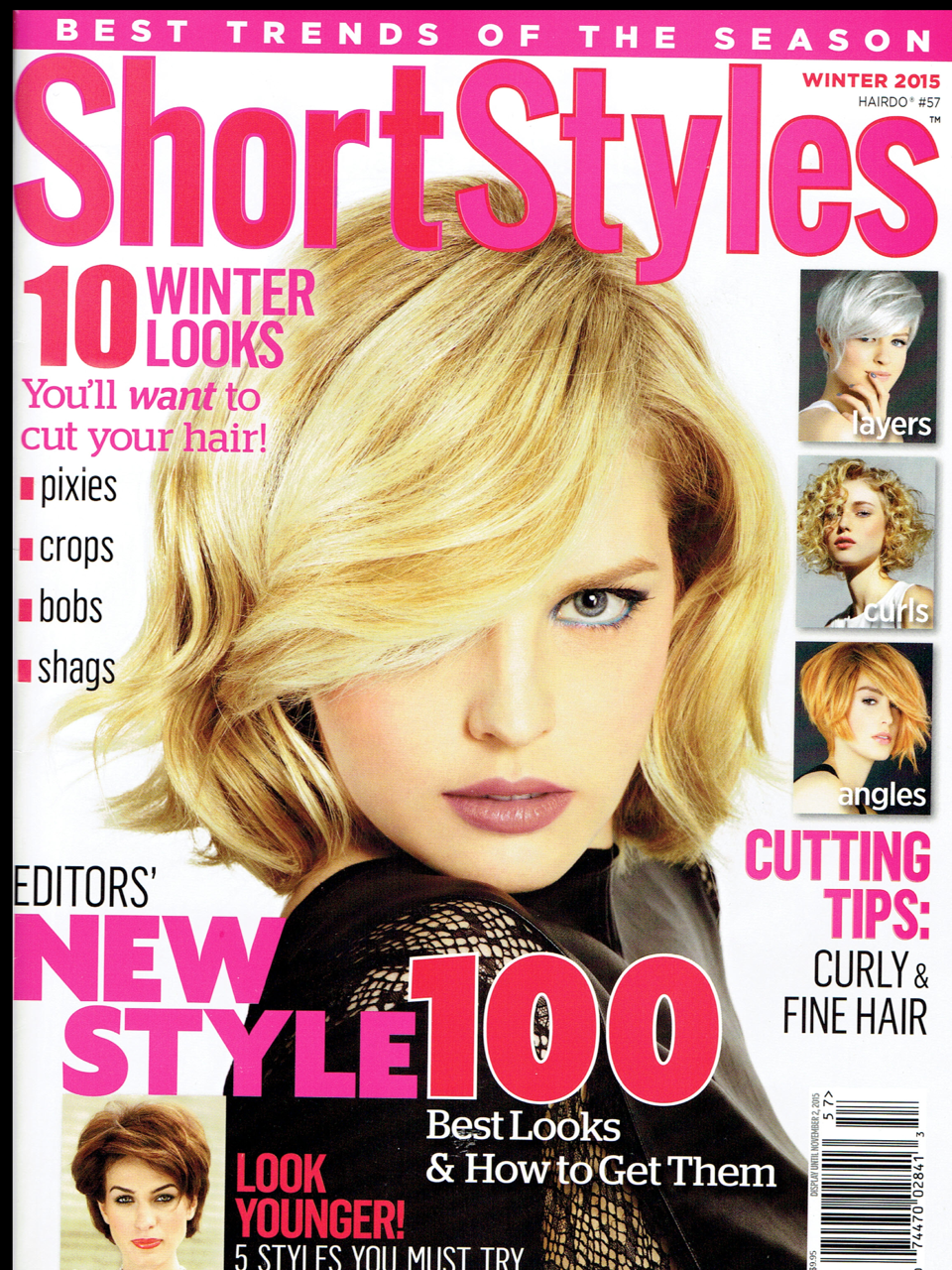
SHORT STYLES WINTER 2015
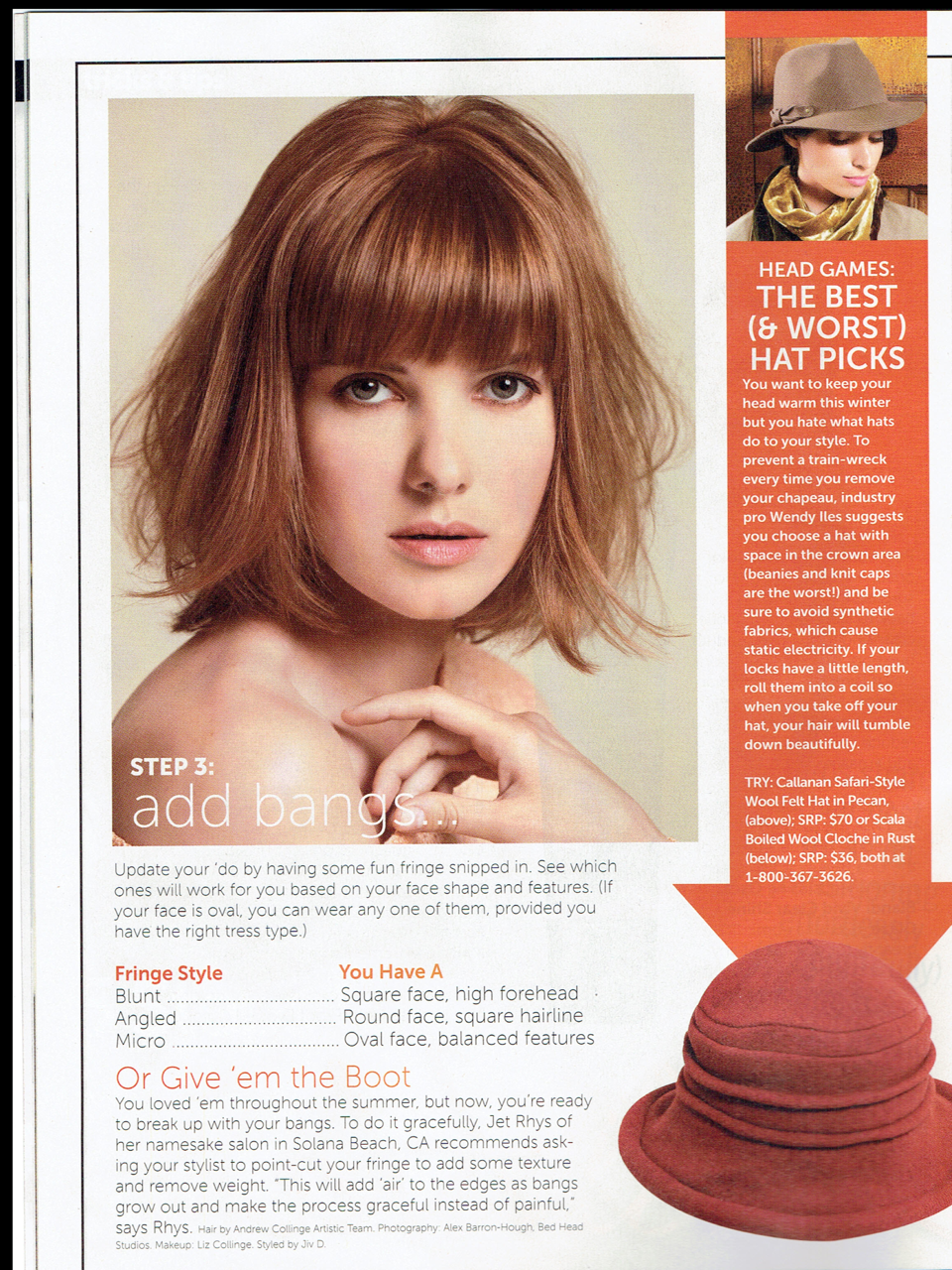
According to SHORT STYLES magazine, you can avoid  a BAD HAIR DAY, by grabbing a Callanan or  Scala hat.

STAY CALM AND GRAB A CALLANAN HAT

Featured hats, CALLANAN LV350-PECAN 100% wool felt safari hat and SCALA LW399-RUST packable boiled wool cloche will get you through the nasty 2015 winter in style.


Thursday, September 24, 2015

SCALA, CALLANAN, TOMMY BAHAMA and CAPPELLI straworld on trend for S16

Pantone’s Spring 2016 Fashion Color Report: “Transformative”

As a follow up to sell "fashion not hats", check out this report from ACCESSORIES MAGAZINE. I have added hats from the S16 catalogs which merchandise back to the S16 pantone colors. The chosen styles are in fact a random selection from the catalogs. When you look at this report you will see that our collections are strewn with on trend fashion colors and silhouettes.
NONE of the competition offer the gamut of fashion styles and colors that we do.

The PANTONE color names are just syntactics. Most of your customers will not even know them but it's good for you to know them.
You say fiesta, I say orange. You call it coral, I call it peach.

Christian Siriano Sketch
Carlstadt, NJ—Most of the Spring/Summer 2016 fashion shows are taking place at Skylight at Moynihan Station, the historic James A. Farley Post Office in Manhattan. But today’s NYFW news comes from New Jersey, home of Pantone, the color authority.
To coincide with New York Fashion Week, Pantone once again debuts its Fashion Color Report, a comprehensive overview of designers’ use of color in their upcoming Spring 2016 collections. This year’s report features designers including Nicole Miller, Rebecca Minkoff, Pamella Roland, and many others using the top colors of the spring season: Rose Quartz, Peach Echo, Serenity, Snorkel Blue, Buttercup, Limpet Shell, Lilac Gray, Fiesta, Iced Coffee, Green Flash.
The Spring 2016 Pantone Fashion Color Report is one of two semiannual reports published for the fashion industry, features the top 10 colors for women’s and men’s fashions, along with designer sketches and inspirations. (The complete report is available at pantone.com/Spring-2016.)
Rebecca Minkoff Sketch
“The colors emerging in the Spring collections serve as vehicles that transport wearers to more tranquil, mindful environs which encourage relaxation first, followed by curiosity and exploration,” reports Pantone.

‘Calm and Relaxation’

“The color palettes of this season transport us to a happier, sunnier place where we feel free to express a wittier version of our real selves,” said Leatrice Eiseman, executive director of the Pantone Color Institute. “Yet with our culture still surrounded by so much uncertainty, we are continuing to yearn for balance by incorporating those softer shades that offer a sense of calm and relaxation.”
Designers were also inspired by the contrast of urban design and lush vegetation, leading to unexpected color combinations and collections reminiscent of architecture, travel and nostalgia. By creating looks that truly represent the world we live in, both constructed and organic, designers sought to awaken a sense of reflection, followed by playful escapism.

Yoana Baraschi SketchRGB

Fine Art Factor

Fine art is also an inspiration. In particular artists–many of whom are known for bold color usage and strong shapes and lines, played an influential role in this season’s styles – from Matisse, Picasso and Frank Stella to Esther Stewart and Sam Falls. With Cuba and other destinations south of the border top of mind, designers are playing with courageous color statements; coupling these vibrant hues with quieting, classic and more natural tones.
Colors shown on the runway also transcend cultural and gender norms. Vivid brights give way to excitement and optimism, though quiet stability prevails in this season’s palette. For Spring 2016 there are truly no perceivable distinctions in color choices between the men’s and women’s collections, both of which focus on a desire to breathe and reflect, then play.
The top colors for men’s and women’s fashion for Spring 2016 are:
LC541-PINK

LP113-FUCH
PANTONE 13-1520 Rose Quartz - mini Swatch card
Rose Quartz, a persuasive yet gentle tone that conveys compassion and a sense of composure. Like a serene sunset or budding flower, “Rose Quartz reminds us to reflect on our surroundings during the busy but lighthearted spring and summer months.”


CR243-CORAL
LC399-GRAPEFRUIT
TBWL57-CORAL
PANTONE 16-1548 Peach Echo - mini Swatch card
Peach Echo, a shade that emanates friendlier qualities, evoking warmth and accessibility.


LC399-M BLUE
PANTONE 15-3919 Serenity - mini Swatch card
Serenity, a blue sky color comforts with a calming effect, bringing a feeling of respite even in turbulent times. A transcendent blue, Serenity provides us with a naturally connected sense of space.


CR255-ASST NAVY
CR251-ASST NAVY

LD70-ASST ROYAL
PANTONE 19-4049 Snorkel Blue - mini Swatch card
Snorkel Blue is a member of the navy family, but with a happier, more energetic context; it’s maritime inspired, implying a relaxing vacation and encourages escape.


LC399-BANANA
csw232-asst
PANTONE 12-0752 Buttercup - mini Swatch card

Buttercup is expressed designers reveal a shining beacon transporting its wearer to a happier, sunnier place.
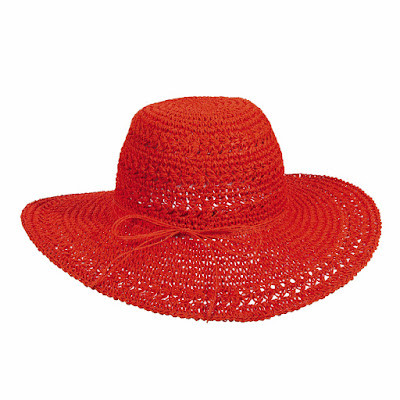


LT64-ORANGE
PANTONE 17-1564 Fiesta - mini Swatch card
Fiesta is a high energy harbinger of excitementencouraging free-spirited exploration to unknown but welcoming locales.


LC399-PERIWINKLE

LT176-ASST DENIM
TBWL61-BLU
PANTONE 16-3905 Lilac Gray - mini Swatch card
Lilac Gray has the subtlety of the lilac undertone with a distinctive edge to this classic gray shade.


LC737-ASST KHAKI

LC768-ASST NAT
BAG951-ASST TOAST
PANTONE 15-1040 Iced Coffee - mini Swatch card
Iced Coffee is a transitional color that will take us through the season as another strong neutral. With its natural earthy quality, the softness and subtlety of Iced Coffee creates a stable foundation when combined with the rest of this season’s palette.

LC754-ASST AQUA
CR242-ASST AQUA

CR245-ASST AQUA
TBWL57-AQUA
PANTONE 13-4810 Limpet Shell - mini Swatch card

Limpet Shell is clear, clean and defined shade of aqua that leans toward the green family and is suggestive of clarity and freshness, its crisp and modern influences evoke a deliberate, mindful tranquility.


LC713-ASST GREEN
LC399-MINT
BAG965-ASST
CSW23-ASST LIME
PANTONE 15-0146 Green Flash - mini Swatch card


Green Flash calls on its wearer to explore and escape the mundane, radiating an openness that combines with the rest of the palette in unexpected but serendipitous ways. The popularity of this brilliant hue is representative of nature’s persistent influence even in urban environments, a trend continuing to inspire designers.