Tuesday, July 31, 2012

OLYMPIC SIZE HATS-LONDONS HATWALK


The 'Hatwalk' comes to town

The likes of Lord Nelson, King George IV and Queen Victoria have been given new hats thanks to 'Hatwalk', the latest creative project to celebrate the Olympic Games.
BY BIBBY SOWRAY | 30 JULY 2012

Lord Nelson wearing his new hat by Lock & Co and Sylvia Fletcher. Photo: Getty
When Stephen Jones told the Telegraph back in May that 2012 would be the year of the hat, citing Ascot and the Jubilee as the main reasons, little did we know that there was another, rather surprising, reason for his belief that he was keeping firmly under his, well, hat.
This morning that secret was finally revealed when 'Hatwalk', the Boris Johnson brainchild curated by Jones and fellow milliner extraordinaire Philip Treacy, was unveiled in London's Trafalgar Square.
The project, which is part of the London 2012 Festival, sees 21 established and emerging millinery talents recreate headwear for some of the capital's most famous hat-wearing statues - including Lord Nelson, King George IV and Shakespeare.
Beginning in Trafalgar Square, the situation of some of the city's best-know statues, Nelson's iconic bicorn hat has been updated by Sylvia Fletcher and Lock & Co (the very same milliners that created the original) to include a Union Jack and Olympic flame. King George IV - and his horse - now wear lavish crowns created by Stephen Jones and inspired by the Brighton Pavillion, the late King's seaside retreat, and Sir Henry Havelock dons a iridescent satellite creation by Philip Treacy.
"The rest of the world see hats as an innately British thing so this is a great celebration of that, our eccentricity and our talent for millinery," Jones told us before revealing that the Duchess of Cambridge is his current favourite hat wearer. "The designs that Sylvia Fletcher creates for her are perfect. They obviously have such a bond when they work together. The hats never wear her, she always wears them."
The project was born about a year ago, thanks to the Mayor of London, and has involved the employment innovative techniques to ensure that the pieces don't damage the statues, but also so that they will withstand the British weather.
"The idea is to make tourists and London to look again at the history of the city and these incredible historical figures, the kind of people that made Danny Boyle's narrative of history come to life in the Opening Ceremony," said Munira Mirza, Deputy Mayor for Culture and Education.
Other designers involved include Charlie Le Mindu, Piers Atkinson, Gina Foster and J Smith Esquire, who have created pieces for the likes of Isambard Kingdom Brunel on Victoria Embankment and Queen Victoria on Blackfriars Bridge.
The hats will be in place around London for the next four days, and life-sized copies of the pieces are on display in BT House at BT London Live in Hyde Park until August 12. 

Admiral Lord Nelson statue in Trafalgar Square given a new hat

Various statues across London, including the famous one of Admiral Lord Nelson in Trafalgar Square, have received specially commissioned headwear to celebrate the best of British millinery talent.

Statues across London have been, specially designed by some of Britain's top hat makers, including Philip Treacy and Stephen Jones.
The two also curated Hatwalk, a new project, which aims to both celebrate London as the home for traditional millinery and draw attention to some of the capital's most iconic yet overlooked statues.
A total of 20 statues can be seen donning new headgear. Amongst them are the statues of Admiral Lord Nelson in Trafalgar Square and former US president Franklin D Roosevelt, whose statue sits next to that of Winston Churchill on a bench in Bond Street.
Lord Nelson's new updated bicorn hat showed the British colours and came complete with a replica of the Olympic torch, designed by London's oldest hatters, Lock & Co who are famous for making the late admiral's original hat.
John Boyd designed Roosevelt's new headpiece, which attracted attention by tourists, who were eager to pose on the bench next to him.
Hatwalk is part of the 'Mayor of London presents' initiative that sees various pop up initiatives around the British capital.

Monday, July 30, 2012

Cheat Sheet- Summer 2013 trends

Summer 2012 may be drawing to a close in many parts of the world but in the fashion world, summer 2013 is just around the corner. So here is a cheat sheet of what you will be wearing and what your customer will be looking for next summer.

                                                     PRINTS AND MOTIFS

*What is summer without pretty flowers. Next summers annuals will be over-sized sketched flowers and also tiny digital floral prints.

*there are birds of every feather depicted on pretty summer frocks. Run Tippi, run!!

*Another perennial classic is the OCEAN. We see lots of deep sea creatures from coral to starfish.

*Mirror prints are a fresh trend. It looks great on clothing, purses and shoes but might be a little tricky on hats.

*Color blocking continues as a strong trend and works great for hats. See Callanan style CR166-asst below.
* Baroque as seen on satin scarves with fleur de lys and leaf scrolling, also looks great on bags and summer hat detailing. I think this trend will be even bigger for fall 2014 with velvet, lace and pearls.

*Animal continues to trend with ZEBRA being the animal du jour.

                                                              TEXTURES

*Exotic skins continue to trend. From snake, to water lizards and crocodile. These work into the Future Fiesta key trend.

Note the use of faux snake on Callanan style CR167-asst.
and CR141-ASST


*Perforated and mesh fabrics. This works into a key trend Sports Authority.

* Eyelet and lace fabrics.
*Metallic, metal and fabrics with high shine.
*transparency- Sports Authority

*Raffia....Woven not crocheted. Works will in bags, hats and raffia trimmed shoes.

*Embellishment, lots of it! Works with the key trend Deco modern.

                                                                   COLORS

* Neutrals, Beige, Brick, Burnt from the key Trend African Oasis.
Style LM161-ASST.

*WHITE.

*BLUES, you can't go wrong.

Carter wearing LM324-asst and Amanda LM326-asst.

* Greens in all shades from mint to pistachio but keep an eye on Jade.

Carter wearing  LM314-asst.
*Yellows.
*Pinks.
*Orange. Pantone nominated tangerine their color of the year 2012.

Style CR129

                         THE FIVE KEY TRENDS

* SPORTS AUTHORITY.
Millions of people will have watched the OLYMPICS this year. These people will be looking for sporty looks for next summer.

*DEMURE DIVA.
Mad Men and The Help. This is a very modern lady like trend. Retro looks fro the 50's and 60's but updated for the 21 century lady.

*DECO MODERN.
The remake of the classic The Great Gatsby will have ladies looking for more embellished accessories.

*Future Fiesta.
Think exotic reptiles, bright ethnic details and neon.

*African Oasis.
Classic safari, animal, tribal and handcrafted themes.

hats off!!!!!!!!!!!!!!!!!!!!!!!!!!!!!!!!!!!!!!!!!!!!!!!!!!!!!!!!!!!!!!!!!!!!!!!!!!!!!!!

The good news is that hats will work with all these trends. Fashion hats like fedoras will continue to sell  as will large brims that offer UPF50 SUN PROTECTION.
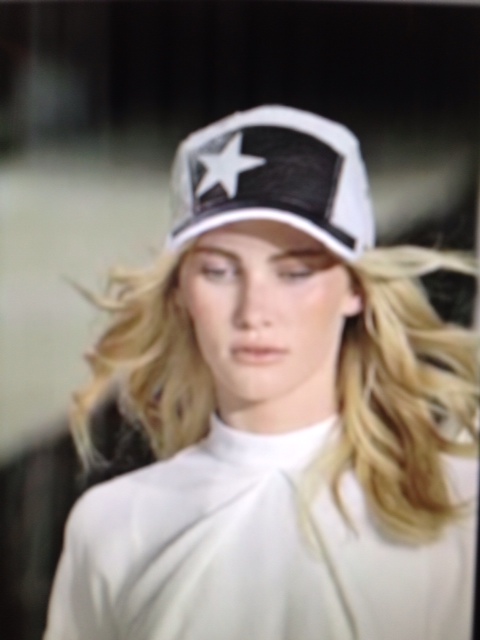
BUT KEEP A CLOSE EYE ON BASEBALL CAPS. We are not talking Gap caps and sports logo caps here. The fashion customer may be tired of jockeys and cadet caps.
It looks like fashion baseball caps may make a resurgence. Here are some from the latest fashion shows.

Might work into the deco trend.

Demure Diva.

Color block/Sports Authority.

Sports Authority
Africa Oasis.
African Safari.

Wednesday, July 4, 2012

hats trends winter 2012


Hats for fall 2012

I am often asked what is the if tend for next season. Menswear inspired hats like fedoras are still very popular as are 1920/30 cloches, but at the end of they day hats are a very personal accessory and a very emotional purchase. Large brims did not retail last season but I am once again seeing them in designer windows for fall 2012.  Ditto for bowlers, I have tried them the past 2 years with luke warm reaction. Ladies will usually buy a mans tweed flat cap from the haberdashery department, so for fall 2012, I am once again betting on fedoras with a feminine trim, molded felt caps and my trade mark cloche styles.
I have just shipped my Downton abby inspired cloche into LORD AND TAYLOR
My 2tone Carnaby fedora will also be available at Lord and Taylor for fall 2012.


In fall 2012 hat holds a special place among the relevant headwear. This colorful accessory can definitely help in creating of an unforgettable image, which is the main goal of the season fashion collections.
Hats for fall 2012
Betsey Johnson, Ruffian, Fatima Lopez, Ralph Lauren, Cacharel
Except romantic wide-brimmed and classics of the 40th – Feodor - among models of fashionable female hats it is possible to meet retrohats of the 20th – cloche hat, and also kettles, boaters, cowboy's and decorative female hats.
Hats for fall 2012
Burberry Prorsum, Max Mara, Hermes, Ralph Lauren, Giorgio Armani
In a fashionable tendency of using a man's image, the hat serves as a finishing touch. Therefore, female hats and caps in man's style become one of the hottest season trends.
Hats for fall 2012
Fatima Lopez, Temperley, John Galliano, Nicholas K, Marc Jacobs
Thanks to the inconsistency of autumn 2012 fashion trends fashion-mongers can wear both tiny female hats and volume models of hats and berets which are also trendy this season.
Hats for fall 2012
Ermanno Scervino, Kenzo, Ralph Lauren, Emporio Armani, John Galliano
Berets can be not only volume, and a variety of models of fashionable caps includes standard baseball caps, flat, rigid, caps with protective "ears" and even the models reminding Russian ear-hat.
Hats for fall 2012
Tracy Reese, Tommy Hilfiger, Moschino, Cacharel, Charlotte Ronson
You can see not only the cowboy hats at fashion shows. Jockey caps and also hats, more like pilots’ liners of the 40th, are really popular in the new season.
Hats for fall 2012
Betsey Johnson, Tracy Reese, Nicole Miller, Tommy Hilfiger, Acne
It’s possible to meet a full palette of relevant season colors in collections of women's hats in autumn 2012: black, dark blue, red, burgundy, brown, orange, mustard, green and gray. To a lesser extent, but still you can meet the cage, as well as animalistic and geometric prints: for example, polka dots and fir-tree. Except traditional felt, smooth and patent leather, fur and dense fabrics, including fabrics with pile, are used.
Information garnered and curtsey of stylishcube.com

Saturday, April 14, 2012

Who designed the STILLETTO


The ancient Greeks depicted Aphrodite in elevator shoes. Centuries later, Venetian courtesans clopped around in towering chopines, while during the reign of Louis XIV, red heels were a mark of nobility. So maybe Christian Louboutin did not invent the red soled stilletto.


But it was after World War II that the stiletto took hold. Soldiers who spent years abroad dreaming of high-heeled pinups, one historian wrote, came home to wives whose wartime work required more sensible shoes. As women returned to domestic life, higher heels could, and did, become all the rage. From the 1950s’ froth of experimentation, the stiletto was born.
Dr. Emily Splichal, a podiatrist and self-styled “stiletto foot expert,” put together a stiletto-recovery-workout kit to “reverse the postural stress from hours in high heels.” Each kit contains the following:

“Some credit Ferragamo, others Roger Vivier or Perugia,” says Valerie Steele, chief curator of the museum at the Fashion Institute of Technology. “I suspect the stiletto was developed by more than one Italian shoemaker, perhaps in association with French designers.”
Its origins may be nebulous, but the stiletto is a precision instrument. Designers used injection molding to encase metal spigots in plastic, making ever-thinner heels safe to stand on.
As heel tips shrank to the size of tacks, the stiletto, named for an Italian shiv from the 1700s, became an emblem of the Jet Age and French haute couture. Gina Lollobrigida wore them, as did Marilyn Monroe, proud owner of 40 pairs of Ferragamo stilettos. The ’60s counterculture rejected high heels, but in pornography the stiletto flourished. In the ’70s, Gloria Vanderbilt wore them with designer jeans. Stylists incorporated stilettos into the power-dressing fad of the ’80s; Madonna carried them into the ’90s, “Sex and the City” into the aughts. In 2008, Mike Huckabee said the only difference between him and Sarah Palin was a pair of stilettos.
Stilettos may shrink or grow taller, but they continue to represent both the empowered woman and the hobbled one. Stilettos make a woman “look taller, thinner, more bosomy and with a curvier bottom,” says Steele, but they also make it difficult for a woman to walk.
“Women’s fashion does not always emphasize the high heel,” Steele wrote in an essay. “Shoe fetishists, however, usually have done so.”
TO THE POINT
Patricia Field, the costume designer for ‘‘Sex and the City,’’ helped cement the stiletto’s legacy. Here, she discusses the signature shoe.
What is a stiletto? A stiletto is a specific style. It’s a shape. It’s not a height. It’s a heel that looks like a Champagne glass. It could be a three-inch stiletto. Or a four-inch stiletto. It could be a two-inch stiletto. It’s the shape.
Why is the stiletto so popular? It is the sexiest, most feminine shape. The shape echoes the shape of the body. When you have a column heel, it gives a different feeling. It gives a more powerful heel, but it doesn’t have that feminine taper to it.
Will it ever go out of style? It’s like leopard, for example. It’s a classic. Sometimes it becomes highly trendy, and sometimes it gets quieter, but it never goes away.
Do you have a personal favorite? My most favorite pair is from Charles Jourdan; it was probably 1962. It was semi-pointy-toed, so I had toe cleavage. And it was about a four-inch stiletto. Maybe five. They cost me $80. That’s like $800 today.
Can anyone pull it off? Well, there are all different kinds of women, and some women can’t handle a high heel, let alone a stiletto, which has the thinnest bottom. You can’t ever put something on a person that they can’t handle. That’s the big faux pas.
What about men? Do you think the stiletto could ever become a men’s shoe?They could become popular for men when men return to dressing like Mozart.
What are the odds of that? The way we dress over time gets much more simplified — much more utilitarian. It’s the nature of the world. Aristocracy is a past tense

Well, maybe Pat is loosing her cool edginess when it come to men in heels.
Cowboys get major bottie push up from sporting heels.

Reports have been floating around for more than a year. Hairy legs atop 4-inch sticks. Bulging calves coming out of Bottega Venetas. Wedges, platforms, even stilettos being worn by -- gasp -- men.
Johnny Weir rocks them. So does Derek J, the Atlanta hair stylist made famous by Bravo's "Real Housewives." New York and San Francisco boast growing groups of glam-footed guys. Los Angeles, too: A New York Timesreport filed from there last week has kicked up the notion that high heels for XY chromosomes are the new hot thing.
Trends aside, men have been wearing heels to make a statement for years. In April, dozens of dudes pushed into pumps for the University of Alaska's fourth annual "Walk a Mile in her Shoes" fundraiser to benefit female sexual assault victims. A similar event in San Antonio, Texas. this month supported victims of domestic violence.
But now, fashion insiders are noticing guys strapping stilettos onto their gams for entirely aesthetic reasons.
PHOTO: Figure skater Johnny Weir poses for photos at the High Heel-A-Thon on "Live With Regis And Kelly" in Central Park, Sept. 22, 2010 in New York.
Ray Tamarra/Getty Images
Olympic figure skater Johnny Weir sometimes... View Full Size


Historically, it's not unprecedented. As the Times pointed out, heels were de rigueur in pre-Napoleonic France. Men of all stripes paired platform shoes with their bell bottoms during the 1970s. The latest iteration finds guys in shoes built for gals.
"What's partly propelling it is the fact that men have become more comfortable with their feminine sides and are less afraid to show that, especially since high heels literally elevate you from the crowd," said Michael Musto, culture critic for the Village Voice.

"It's the girly fascination," said celebrity stylist Philip Bloch. "These men can appreciate the heels for their artwork."

Bloch pointed out that women co-opt menswear all the time. Take the boyfriend jean, the baggier, rolled up cousin of skinny, boot-leg and flared styles. Loafers, tuxedos, fedoras and ties have all, at varying points, found a home in the women's department.
For now, men buying heels is a trend without numbers. But, pardon the pun, it's got legs.
"It's still too small of a trend now to make it on the radar and there's still not enough people that will allow themselves to be counted as purchasing that product," said Marshal Cohen, chief industry analyst of the market research firm the NPD Group. "But we will, by next year, be able to quantify it."
Cohen billed the trend as "part of the new migration of consumer openness." Indeed, if there were ever a time for men to feel comfortable slipping on a pair of Manolos, it's now. In the past year, bullying became the enemy, "Don't Ask, Don't Tell" was repealed and New York legalized gay marriage. If Lady Gaga serves as an example, androgyny is in.
But then there's the physical factor.
"Once they dig their feet into a pair of six-inchers and realize how incredibly awkward it feels, I think most guys will run back to flats," Musto said, musing that the most flattering high heel for a man "would probably be an open-toed one for a quick exit."
Still, even if the trend only sticks around as long as it takes to develop a callus on the ball of of a foot (for the uninitiated: it doesn't take very long), Simon Doonan, the creative ambassador of Barneys and author of "Eccentric Glamour," applauds men attempting what women have endured for centuries.
"It's the same as gay marriage," he said. "Why should straight people be the only ones who suffer?"

Tuesday, April 10, 2012

Hats off to neurobiology

Once in a while you read something that really resonates with you. This is one for me. I remember the loving touch of my mother's holding my
hand as we walked to the dreaded parochial school when I was 4 and I know that although my mother has sever senile dementia for 10, she
still reacts to the touch of my hand. I hope that someone that I love will hold my hand when my number is up.


March 24, 2012, 4:28 PM

The Brain on Love

Diane Ackerman
Diane Ackermanon the natural world, the world of human endeavor and connections between the two.
A RELATIVELY new field, called interpersonal neurobiology, draws its vigor from one of the great discoveries of our era: that the brain is constantly rewiring itself based on daily life. In the end, what we pay the most attention to defines us. How you choose to spend the irreplaceable hours of your life literally transforms you.
All relationships change the brain — but most important are the intimate bonds that foster or fail us, altering the delicate circuits that shape memories, emotions and that ultimate souvenir, the self.
Every great love affair begins with a scream. At birth, the brain starts blazing new neural pathways based on its odyssey in an alien world. An infant is steeped in bright, buzzing, bristling sensations, raw emotions and the curious feelings they unleash, weird objects, a flux of faces, shadowy images and dreams — but most of all a powerfully magnetic primary caregiver whose wizardry astounds.
Olimpia Zagnoli
Brain scans show synchrony between the brains of mother and child; but what they can’t show is the internal bond that belongs to neither alone, a fusion in which the self feels so permeable it doesn’t matter whose body is whose. Wordlessly, relying on the heart’s semaphores, the mother says all an infant needs to hear, communicating through eyes, face and voice. Thanks to advances in neuroimaging, we now have evidence that a baby’s first attachments imprint its brain. The patterns of a lifetime’s behaviors, thoughts, self-regard and choice of sweethearts all begin in this crucible.
We used to think this was the end of the story: first heredity, then the brain’s engraving mental maps in childhood, after which you’re pretty much stuck with the final blueprint.
But as a wealth of imaging studies highlight, the neural alchemy continues throughout life as we mature and forge friendships, dabble in affairs, succumb to romantic love, choose a soul mate. The body remembers how that oneness with Mother felt, and longs for its adult equivalent.
As the most social apes, we inhabit a mirror-world in which every important relationship, whether with spouse, friend or child, shapes the brain, which in turn shapes our relationships. Daniel J. Siegel and Allan N. Schore, colleagues at the University of California, Los Angeles, recently discussed groundbreaking work in the field at a conference on the school’s campus. It’s not that caregiving changes genes; it influences how the genes express themselves as the child grows. Dr. Siegel, a neuropsychiatrist, refers to the indelible sense of “feeling felt” that we learn as infants and seek in romantic love, a reciprocity that remodels the brain’s architecture and functions.
Does it also promote physical well-being? “Scientific studies of longevity, medical and mental health, happiness and even wisdom,” Dr. Siegel says, “point to supportive relationships as the most robust predictor of these positive attributes in our lives across the life span.”
The supportive part is crucial. Loving relationships alter the brain the most significantly.
Just consider how much learning happens when you choose a mate. Along with thrilling dependency comes glimpsing the world through another’s eyes; forsaking some habits and adopting others (good or bad); tasting new ideas, rituals, foods or landscapes; a slew of added friends and family; a tapestry of physical intimacy and affection; and many other catalysts, including a tornadic blast of attraction and attachment hormones — all of which revamp the brain.
When two people become a couple, the brain extends its idea of self to include the other; instead of the slender pronoun “I,” a plural self emerges who can borrow some of the other’s assets and strengths. The brain knows who we are. The immune system knows who we’re not, and it stores pieces of invaders as memory aids. Through lovemaking, or when we pass along a flu or a cold sore, we trade bits of identity with loved ones, and in time we become a sort of chimera. We don’t just get under a mate’s skin, we absorb him or her.
Love is the best school, but the tuition is high and the homework can be painful. As imaging studies by the U.C.L.A. neuroscientist Naomi Eisenberger show, the same areas of the brain that register physical pain are active when someone feels socially rejected. That’s why being spurned by a lover hurts all over the body, but in no place you can point to. Or rather, you’d need to point to the dorsal anterior cingulate cortex in the brain, the front of a collar wrapped around the corpus callosum, the bundle of nerve fibers zinging messages between the hemispheres that register both rejection and physical assault.
Whether they speak Armenian or Mandarin, people around the world use the same images of physical pain to describe a broken heart, which they perceive as crushing and crippling. It’s not just a metaphor for an emotional punch. Social pain can trigger the same sort of distress as a stomachache or a broken bone.
But a loving touch is enough to change everything. James Coan, a neuroscientist at the University of Virginia, conducted experiments in 2006 in which he gave an electric shock to the ankles of women in happy, committed relationships. Tests registered their anxiety before, and pain level during, the shocks.
Then they were shocked again, this time holding their loving partner’s hand. The same level of electricity produced a significantly lower neural response throughout the brain. In troubled relationships, this protective effect didn’t occur. If you’re in a healthy relationship, holding your partner’s hand is enough to subdue your blood pressure, ease your response to stress, improve your health and soften physical pain. We alter one another’s physiology and neural functions.
However, it’s not all sub rosa. One can decide to be a more attentive and compassionate partner, mindful of the other’s motives, hurts and longings. Breaking old habits isn’t easy, since habits are deeply ingrained neural shortcuts, a way of slurring over details without having to dwell on them. Couples often choose to rewire their brains on purpose, sometimes with a therapist’s help, to ease conflicts and strengthen their at-one-ness.
While they were both in the psychology department of Stony Brook University, Bianca Acevedo and Arthur Aron scanned the brains of long-married couples who described themselves as still “madly in love.” Staring at a picture of a spouse lit up their reward centers as expected; the same happened with those newly in love (and also with cocaine users). But, in contrast to new sweethearts and cocaine addicts, long-married couples displayed calm in sites associated with fear and anxiety. Also, in the opiate-rich sites linked to pleasure and pain relief, and those affiliated with maternal love, the home fires glowed brightly.
A happy marriage relieves stress and makes one feel as safe as an adored baby. Small wonder “Baby” is a favorite adult endearment. Not that romantic love is an exact copy of the infant bond. One needn’t consciously regard a lover as momlike to profit from the parallels. The body remembers, the brain recycles and restages.
So how does this play out beyond the lab? I saw the healing process up close after my 74-year-old husband, who is also a writer, suffered a left-hemisphere stroke that wiped out a lifetime of language. All he could utter was “mem.” Mourning the loss of our duet of decades, I began exploring new ways to communicate, through caring gestures, pantomime, facial expressions, humor, play, empathy and tons of affection — the brain’s epitome of a safe attachment. That, plus the admittedly eccentric home schooling I provided, and his diligent practice, helped rewire his brain to a startling degree, and in time we were able to talk again, he returned to writing books, and even his vision improved. The brain changes with experience throughout our lives; it’s in loving relationships of all sorts — partners, children, close friends — that brain and body really thrive.
During idylls of safety, when your brain knows you’re with someone you can trust, it needn’t waste precious resources coping with stressors or menace. Instead it may spend its lifeblood learning new things or fine-tuning the process of healing. Its doors of perception swing wide open. The flip side is that, given how vulnerable one then is, love lessons — sweet or villainous — can make a deep impression. Wedded hearts change everything, even the brai

Monday, April 9, 2012

HAT TRIVIA. Who designed the earmuffs?


Each December, for the past 36 years,  the residents of Farmington, Me., have held a parade for their favorite son, a boy who invented earmuffs. According to town legend, Chester Greenwood was a 15-year-old with large and sensitive ears. “So,” writes Nancy Porter, in the book “Chester . . . More Than Earmuffs,” “he bent wires into circles with a connecting wire over his head.” Greenwood had his grandmother sew fabric onto the part that covered the ear. “Let it be known,” began his 1877 patent application, “that I, Chester Greenwood, . . . have invented certain new and certain useful Improvements for Ear-Mufflers.”
He may not have been the first person to ever put a so-called muffler over an ear, but he made a fortune off it. 


By 1882, Chester Greenwood & Company was making 50,000 pairs a year. By the start of World War I, Greenwood, who would go on to also patent the spring-toothed rake, landed a lucrative contract with the armed forces. (“Everyone in the service really jumped on the bandwagon,” says Vasilios Christofilakos, chairman of the Fashion Institute of Technology’s accessories-design department.) In 1938, a year after Greenwood’s death, Life magazine likened his simple innovation to “the Model T Ford” of earmuffs. Five years later, Miss New York appeared on Life’s cover resplendent in earmuffs. Inside, it hailed the ascendancy of the accessory to “the top rung of the fashion ladder.”


Alas, the earmuff could not maintain its cachet. After playing a supporting role in the fashion tragedy that was the 1980s (“You would spend the $50 for a pair of mink earmuffs, and you were hot,” Christofilakos says), it lost market share to head gear like 180s, a fleece headband-cum-earmuff commonplace among teenagers, suburban dads and even sports fans in inclement cities. There are, however, signs of a renaissance. Louis Vuitton has since sold earmuffs for $985; Gucci for $390. A couple years ago, Ivanka Trump bought 20 faux-chinchilla earmuffs for her closest friends. “I cleared them out,” she says.

For the last 25 years, Clyde Ross, a retired social-studies teacher, has portrayed Chester Greenwood in the annual Farmington parade. Here, he explains:

Chester Greenwood's grandson, George Greenwood, at left, greets Clyde Ross of Farmington, who has played Chester Greenwood in the parade for many years.
How did you assume this role?
I was elected by popular vote.
Do you bear much resemblance to him?
If I put on a mustache and a bowler hat, and you stood us side by side, it would be quite similar.
Is the parade the only time of year that people refer to you as Chester Greenwood?
Well, this morning I was in the pie restaurant, and someone said, ‘‘There’s Chester Greenwood.’’ I go to public schools and talk about Chester Greenwood and some of his activities from time to time. And there are some of my friends that refer to me as Chester Greenwood.
What do you find most fascinating about Greenwood?
He was a man of practicality. He would try to fashion devices that would help to make the work easier and give farmersand lumber people an opportunity to move along. He was also a man who did not use what you and I refer to today as vices: tobacco and alcohol.
Any special preparation involved in your role?
I have to go to the local barber and have my mysterious mustache put on. I have some theatrical materials that I use.
Do you own earmuffs?
I have some originals that were sold right here in Farmington. The lady said, ‘‘If you’re going to be Chester Greenwood, you gotta have originals.’’


Greenwood also invented the bottom whistling kettle, the mechanical mouse trap, and the spring steel rake, among many others. He is listed on the Smithsonian Institution's list of America's 15 Outstanding Inventors.